Mixed Media Cardmaking: Layered Watercolor & Texture
by Nicki Baxley April 28, 2026

KEY TAKEAWAYS
Iterative Layering: Build depth by starting with a watercolor wash and adding stencils, sprays, and stamps sequentially.
Dimensional Elements: Use watercolor-painted die cuts (Zero-Waste: Wildflower Meadow) to create tactile focal points.
Creative Flexibility: Mixed media allows for a customizable finish, ranging from clean and simple to highly textured and complex.
Single Panel Design: Consolidate all techniques—watercolor, stamping, and die-cutting—onto one panel for a cohesive, professional look.
Mixed media cardmaking techniques don’t have to feel complicated. In fact, the beauty of this art form lies in its versatility. It can be as simple as starting with one base layer and continuing to build, adding as much or as little as you like along the way to achieve a professional, artistic finish.
Building Depth with Mixed Media Cardmaking Techniques
This specific card is created by layering watercolor, stamping, texture paste, and die cutting onto a single panel. By allowing each step to build on the last, you create a cohesive design that feels intentional. There’s no strict formula to follow—just a creative process of adding texture, color, and fine detail until the composition feels balanced and complete.
The best part is how flexible these mixed media cardmaking techniques are. Layers can be added gradually, adjusted as needed, and built up to create a finished card with incredible depth and visual interest that standard flat cards often lack.

Step-by-Step Layering Process
To see these techniques in action, be sure to watch the full video on the Altenew channel. You'll see exactly how each layer is added and how the card evolves from a blank slate to a finished masterpiece.
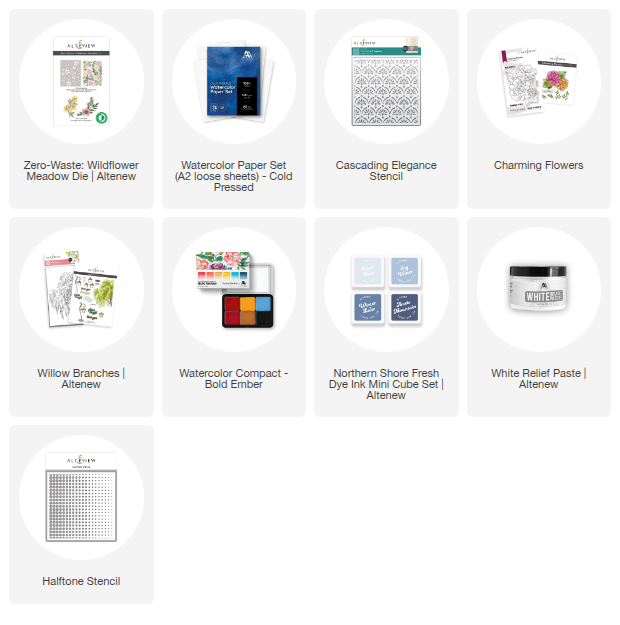
The Watercolor Foundation: The background begins with high-quality Altenew watercolor paper. I applied a soft, atmospheric watercolor wash using the vibrant Bold Ember watercolor set to establish the color palette.
Adding Texture and Detail: Once the base is dry, the real mixed media cardmaking techniques begin. Layers are added using intricate stencils, pigment sprays for a touch of shimmer, and strategic stamping with the Charming Flowers set to build tactile texture.
Creating Dimensional Focal Elements: For the main focal points, I used loose watercolor techniques to paint custom paper, which was then transformed into delicate flowers using the Zero-Waste: Wildflower Meadow Die.
Final Assembly: These die-cut pieces are arranged and layered to build physical dimension, drawing the viewer's eye directly to the center of the design.

Achieving Versatility in Your Craft
All of the elements eventually come together on a single panel, with each layer adding a bit more texture and interest than the one before. This approach to mixed media cardmaking techniques allows for total flexibility at every step. You can keep your layers simple for a "clean and simple" look or build them up further for a more distressed, vintage, or maximalist aesthetic.

VIDEO TUTORIAL
Watch the video tutorial below to learn more about this cardmaking technique!

I hope this guide gives you a fresh way to approach your craft and helps you feel more freedom as you experiment with different mediums.
Happy crafting,
Nicki

Class of the month:
Get 40% off the Crafting 101 - Alcohol Markers Online Cardmaking Class + Kit Pass from April 28, 2026 at 12:01 AM EDT until April 30, 2026 at 11:59 PM EDT. Shop here: https://altenew.com/products/crafting-101-alcohol-markers-online-cardmaking-class
SUPPLY LIST